How to Use AI in DevOps: Transforming Continuous Delivery into Continuous Intelligence with Agentic DevOps Solutions
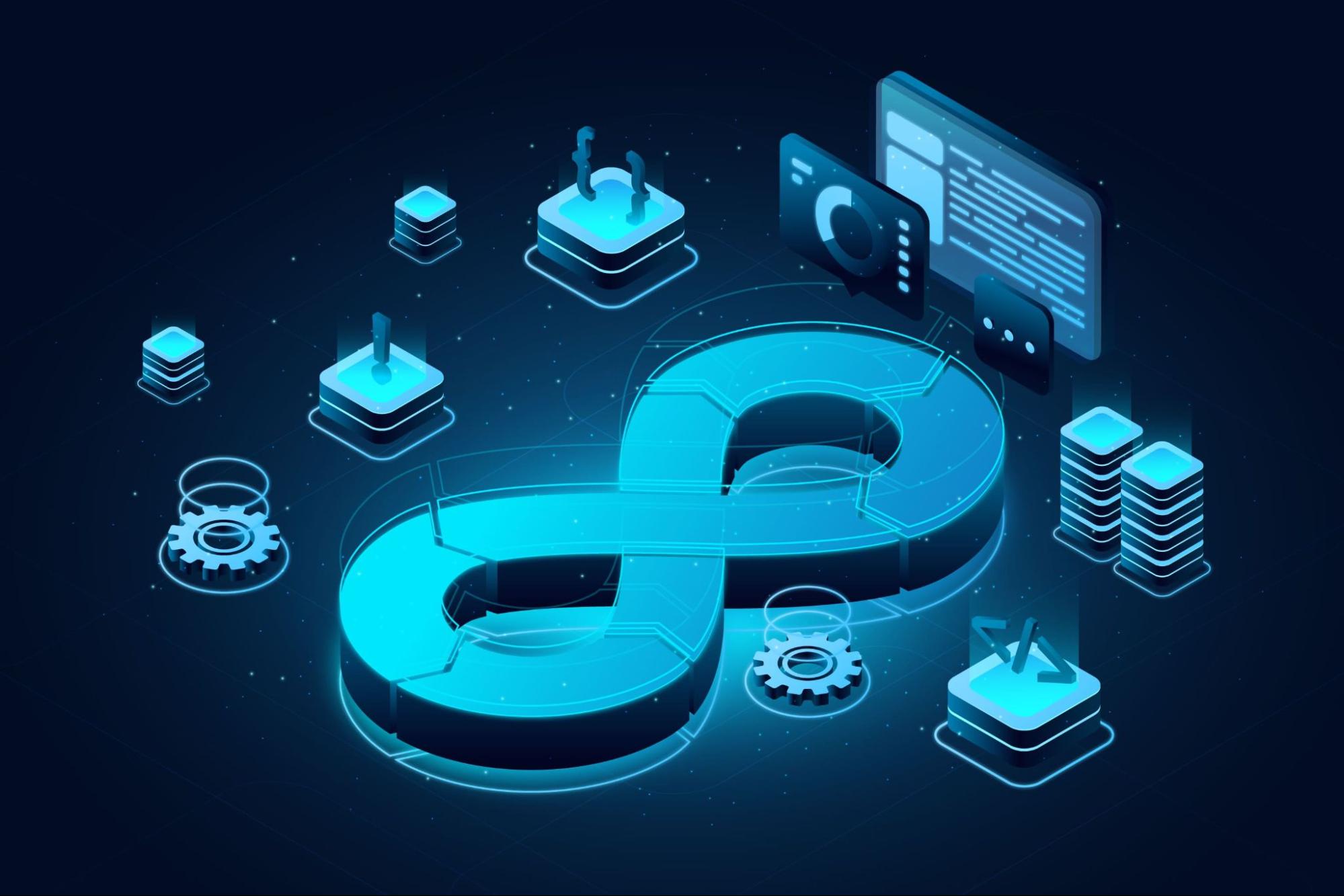
Introduction: The Dawn of Continuous Intelligence
The landscape of software delivery is undergoing a radical transformation. For years, DevOps has served as the gold standard, promising faster releases, improved collaboration, and better stability. This methodology, rooted in cultural change and automation, was designed to shorten the systems development life cycle while delivering features, fixes, and updates frequently in close alignment with business objectives. Today, however, the sheer complexity of modern microservices, multi-cloud architectures, and the relentless speed of business are exposing the limits of human-driven processes. Simply having a mature DevOps practice is no longer enough to maintain a competitive edge.
The answer lies in the synergistic relationship between Artificial Intelligence and operations: Agentic DevOps. This paradigm shift elevates Continuous Delivery (CD) to Continuous Intelligence (CI) by deploying autonomous, intelligent agents that not only automate tasks but also learn, predict, and optimize the entire delivery pipeline in real-time. This blog post will explore how this powerful combination transforms software development and operational stability, moving you beyond traditional DevOps to a future powered by intelligent agents.
I The Imperative for Change: Why Traditional DevOps is Not Enough
The foundation of modern software engineering is DevOps—the practice that unites software development (Dev) and IT operations (Ops). It’s an organizational culture and philosophy that emphasizes communication, collaboration, integration, and automation. But to truly understand where we are going, we must first be clear on where we started.
What is DevOps?
At its core, what is DevOps? It is the intersection of three fundamental concepts: People, Process, and Tools. It's a response to the disconnect inherent in the traditional Waterfall model. The value proposition of DevOps has always been its ability to create a fast, reliable flow of value to the customer. We define it by key principles like Infrastructure as Code (IaC), Continuous Integration (CI), and Continuous Delivery (CD). Despite its success, the volume of data generated by modern systems—logs, metrics, traces—is overwhelming, making it impossible for human teams to ingest and act upon it with the required speed and precision.
The Evolving Role of the DevOps Engineer
The role of the DevOps engineer has always been critical, acting as the bridge builder, the automation specialist, and the guardian of the pipeline. They are responsible for implementing and maintaining CI/CD pipelines, managing infrastructure, and ensuring monitoring is in place. However, the expectation is now shifting. Instead of manually writing thousands of lines of monitoring queries or configuring complex auto-scaling rules, the future DevOps engineer will be a "DevOps Architect" who trains, directs, and governs the AI agents that handle the minute-by-minute operational work. This allows the engineer to focus on strategic initiatives, complex architectures, and innovation, not tedious, repetitive toil. The need for a proactive approach is what is driving the adoption of AI in DevOps.
Moving Beyond devops best practices
While adhering to DevOps best practices —like trunk-based development, immutable infrastructure, and "everything-as-code"—is non-negotiable for a healthy pipeline, they still leave gaps. These practices are excellent for deterministic, known problems, but they struggle with emergent, unpredictable issues in highly complex environments.
For example, a standard best practice might be to set up threshold alerting. Agentic DevOps goes further, predicting the failure before the threshold is met by analyzing historical patterns and complex variable interactions that a static threshold would miss. This shift moves us from reactive practices to proactive, intelligent resolution.
II. The Fusion: Understanding AI-Driven Development and Operations

If you ask what DevOps is in the modern enterprise, the answer must include intelligence. The integration of AI isn't just a new feature; it’s a foundational change to the entire methodology. This powerful fusion fundamentally changes how we design, build, deploy, and manage software at scale. This integration is why the term AI DevOps has become central to industry discussions.
Essential DevOps Tools for the AI Era
The ecosystem of DevOps tools is vast, encompassing everything from version control systems like Git to automation servers like Jenkins, and configuration management platforms like Ansible. The next generation of these tools is being infused with machine learning capabilities. AI and DevOps are being embedded directly into existing toolchains to:
- Optimize Build Times: Predicting which tests need to run based on code changes to save time.
- Intelligent Canary Deployments: Automatically adjusting traffic based on real-time anomaly detection in the new version.
- Automated Incident Triage: Instantly correlating events across different tools (e.g., Jira, Prometheus, Splunk) to determine root cause faster than any human.
Elevating DevOps Services with Intelligence
The delivery of DevOps services is seeing a huge boost in efficiency and capability. Traditionally, these services focused on pipeline setup, infrastructure provisioning, and monitoring integration. Now, they are being augmented with capabilities like AIOps. This means services now include:
- Predictive Maintenance: AI models analyze system telemetry to anticipate component failure or performance degradation.
- Noise Reduction: Machine learning filters out the vast majority of non-critical alerts, providing a single, high-fidelity signal to the on-call team.
- Auto-Remediation: For known failure modes, AI agents can automatically execute runbooks to restore service without human intervention. The shift is clearly towards DevOps AI.
The Value of DevOps Certification in an AI World
While AI agents take on more tactical work, the strategic understanding validated by a DevOps certification becomes even more valuable. A certified professional understands the end-to-end pipeline, the cultural implications of automation, and how to govern a complex system.
In the context of Agentic DevOps, a certification demonstrates the holder's ability to:
- Design observability strategies that feed AI models.
- Establish guardrails and governance for autonomous agents.
- Integrate AI insights back into the development lifecycle for continuous improvement.Human expertise remains the essential layer for strategy and oversight.
III. Strategic Integration: Leveraging Expert AI for Optimal Performance
The strategic deployment of AI within the pipeline is often best achieved through expert guidance. This is where specialized support comes in.
The Role of devops consulting services in AI Adoption
Organizations often lack the internal expertise to seamlessly integrate advanced AI/ML models into their existing CI/CD infrastructure. This is precisely where DevOps consulting services become indispensable. Consultants specializing in AIOps provide tailored roadmaps, help select the right platforms, and assist in training initial AI models on proprietary data. They transform theoretical AI potential into concrete, measurable business outcomes like reduced MTTR (Mean Time to Resolution) and increased deployment frequency. These services ensure proper use of modern DevOps automation tools.
Finding the Right DevOps Consulting Partner
Choosing a DevOps consulting partner means looking for more than just pipeline automation experience. You need a partner with deep knowledge in machine learning engineering, data pipeline development, and regulatory compliance. The focus shifts from merely building a pipeline to engineering an intelligent feedback loop, where every deployment enriches the AI model. This consultative approach is essential for realizing the true power of Agentic DevOps.
Strengthening with DevOps security (DevSecOps)
The speed of continuous delivery must never compromise security. DevOps security—or DevSecOps—is the practice of integrating security testing and processes throughout the entire development lifecycle. AI in DevOps massively enhances this:
- Intelligent Vulnerability Prioritization: AI analyzes vulnerability scan results and uses context (e.g., code usage, internet exposure, dependencies) to prioritize the few critical fixes over the flood of low-priority alerts.
- Automated Policy Enforcement: Agents monitor code commits and infrastructure deployments in real-time to ensure adherence to compliance policies and instantly block high-risk actions.
- Behavioral Anomaly Detection: AI continuously profiles the behavior of users, applications, and infrastructure to detect subtle, malicious deviations that static rules would miss.
Next-Generation devops automation tools
While traditional scripting forms the backbone of CI/CD, the new generation of DevOps automation tools is deeply integrated with AI. These tools move beyond simple orchestration:
- AIOps Platforms: Tools that ingest massive streams of operational data, perform correlation, and provide actionable intelligence.
- Code Generation Tools: AI-powered agents assist in writing infrastructure-as-code (IaC) templates, reducing errors and saving time.
- Self-Healing Systems: Intelligent agents that execute complex, multi-step remediation processes—for instance, isolating a failing node, spinning up a replacement, and redirecting traffic—all without human intervention. This demonstrates the power of AI DevOps tools.
IV. Next-Gen Platforms: Enterprise-Grade Agentic DevOps
The ultimate goal is a cohesive, enterprise-scale solution that handles the complexity of modern cloud infrastructure.
Embracing cloud devops software for enterprises
For large organizations running multi-cloud or hybrid environments, the reliance on advanced cloud devops software for enterprises is non-negotiable. These platforms are designed for scale, compliance, and security, and they are the natural hosts for agentic AI. The platform provides a single pane of glass where AI agents can monitor, optimize, and secure hundreds or thousands of services. Key features include centralized governance, cross-cloud configuration management, and the ability to train AI models on consolidated, normalized enterprise-wide data.
The Crucial Role of an ai services company
Adopting Agentic DevOps is a major undertaking. Partnering with a specialized AI services company provides the necessary technical depth and strategic guidance. These companies bring pre-trained models, expertise in integrating AI with existing enterprise systems (like ServiceNow or SAP), and the ability to fine-tune open-source AI models for specific operational contexts. They accelerate the journey from pilot to production deployment, ensuring the AI models deliver immediate, measurable ROI.
Selecting the Right ai software company
Choosing the right AI software company is critical for platform success. Look for vendors who specialize in operational intelligence and have a proven track record of deploying robust, secure, and scalable AI agents. The software must be able to handle real-time data streaming, offer transparent model explainability, and integrate seamlessly with existing DevOps tools and processes. A good partner offers not just software, but a continuous intelligence platform.
The Holistic Approach of AI DevOps
AI DevOps represents the total melding of the two disciplines. It’s not just using AI to improve one step (like monitoring); it’s using AI to connect and optimize every step:
- Plan: AI analyzes past performance and defect rates to set realistic velocity goals.
- Code: AI assists developers with real-time suggestions and bug fixes.
- Test: AI generates test cases, prioritizes tests, and analyzes test coverage gaps.
- Deploy: AI manages canary deployments, rollbacks, and blue/green strategies.
- Monitor: AI detects anomalies, predicts failures, and triggers auto-remediation.
V. The Agentic Shift: From Automation to Continuous Intelligence
The deployment of autonomous, goal-oriented agents drives the move to Continuous Intelligence.
Maximizing Efficiency with ai in devops
The true value proposition of AI in DevOps is the transition from simple scripted automation to sophisticated, self-optimizing systems. AI in DevOps agents don't just execute instructions; they pursue goals. For example, an agent's goal might be “Maintain system latency below 50ms at all times.” The agent is then empowered to make autonomous decisions—scaling up resources, clearing caches, or even rolling back a recent deployment—to achieve that goal. This level of autonomy frees up the DevOps engineer from constant, tedious micromanagement, allowing focus on strategic DevOps best practices.
The Continuous Feedback Loop of DevOps AI
The most powerful element of DevOps AI is the continuous feedback loop. Every incident, every successful deployment, every resource adjustment is fed back into the machine learning model. This creates a perpetually learning system:
- Incident Data → Model learns to predict future failures.
- Code Performance Data → Model suggests code optimizations to developers.
- Deployment Success/Failure → Model refines its deployment strategy.
This cyclical, self-improving process is the definition of Continuous Intelligence.
Why ai and devops Belong Together
The synergy of AI and DevOps solves the scale problem. DevOps provided the structure and the pipeline for fast delivery. AI provides the brainpower to manage the exponential complexity that comes with that speed. One gives the mechanism; the other provides the intelligence. Together, they create a system capable of operating at the speed of light while maintaining ultra-high reliability, something traditional DevOps could only aspire to achieve. This also includes bolstering DevOps security.
Unlocking Potential with ai devops tools
The emerging category of AI DevOps tools includes specialized agents for various parts of the pipeline:
- Observability Agents: For deep, predictive analytics.
- Security Agents: For autonomous threat modeling and policy enforcement.
- Optimization Agents: For automatically tuning resource utilization (FinOps).
These tools are not add-ons; they are becoming the core fabric of the modern continuous delivery system, enabling the future of software development where intelligence is embedded in every stage.
VI. Conclusion: Your Journey to Continuous Intelligence
The future of software delivery is intelligent. The principles of DevOps provided the necessary framework for speed, but the power of AI is providing the intelligence required to manage modern complexity at scale. By strategically adopting Agentic DevOps Solutions, your organization can transition from Continuous Delivery to Continuous Intelligence, moving beyond reactive management to a state of perpetual, proactive optimization.
Embrace this fusion, leverage expert guidance from a capable AI services company, and empower your DevOps engineer to focus on innovation, not toil. The time to build your intelligent pipeline is now.
What is your next step? Are you ready to transform your existing DevOps practice with intelligent agents? Contact us today to schedule a DevOps consulting session and roadmap your journey to Continuous Intelligence.
