What Is Software as a Service (SaaS)? How Does Software-as-a-Service Work?
The Strategic Imperative: Understanding Software-as-a-Service for Modern Enterprises
The digital transformation mandate has fundamentally shifted how businesses acquire and deploy essential technology. Gone are the days of costly on-premise infrastructure, complicated license management, and intensive hardware maintenance. Today, the operational model of choice for the world’s leading companies is leveraging utility-based, subscription-driven software. Central to this paradigm shift is Software-as-a-Service (SaaS).
This model is not just a trend; it's the dominant force reshaping global business technology consumption. But what exactly is software-as-a-service, and what makes it the strategic cornerstone for innovation and efficiency in the USA market? For CEOs and decision-makers, understanding SaaS is critical for making informed technology investments that drive measurable ROI. This comprehensive guide will dissect the architecture and benefits, clearly defining what SaaS is and how this model can revolutionize your business operations.
Defining the Cloud Model: What Is SaaS and Its Role in Cloud Computing?

Target Keyword (USA High Traffic): what is saas
Search Intent: Informational
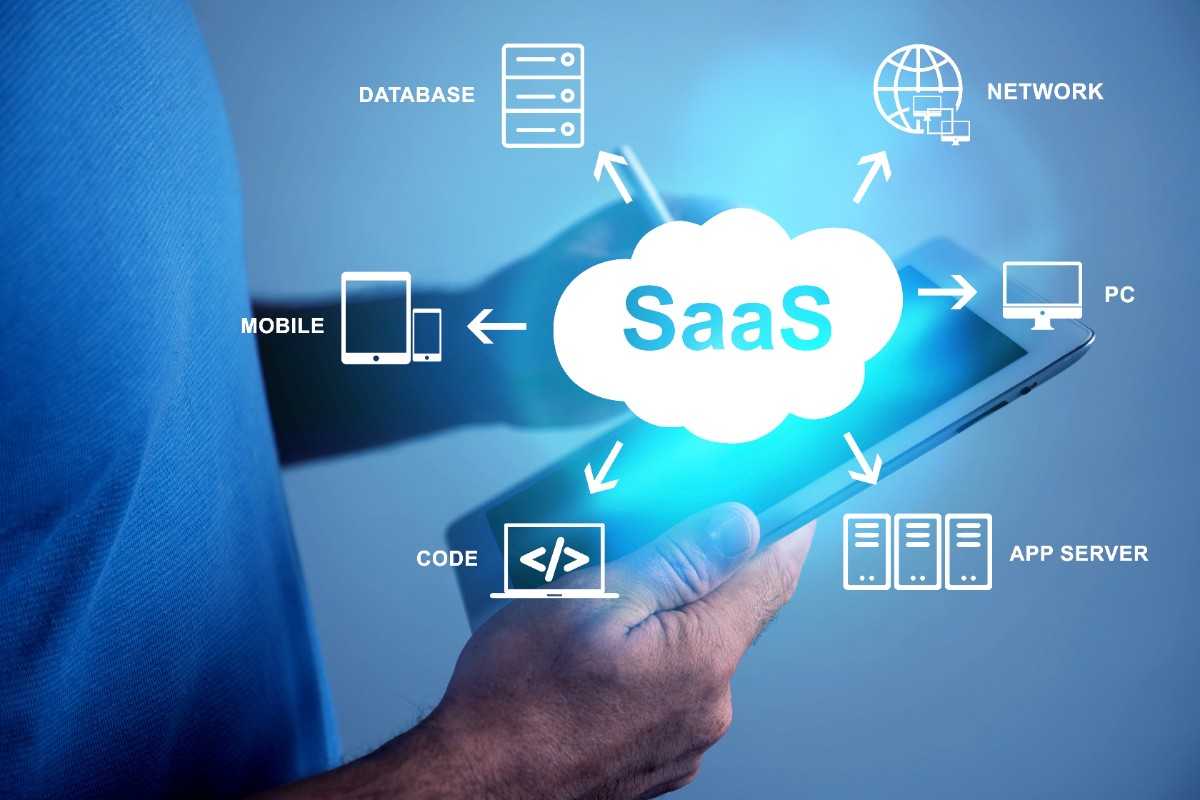
At its core, SaaS is a method of software delivery that allows data to be accessed from any device with an internet connection and a web browser. The software itself is hosted and maintained entirely by a saas provider or vendor.
So, what is saas in practical terms? It is the most common and user-friendly layer of the modern cloud computing stack. Unlike traditional perpetual-license software, where the user must purchase, install, and maintain the application and its infrastructure, saas operates on a subscription basis. This removes the operational burden from the customer, delivering immediate and reliable access to essential business tools.
The entire technological stack is managed by the vendor. This includes:
- The application software.
- Middleware and operating systems.
- Servers and storage (the underlying cloud based software ).
- Security and maintenance updates.
The user merely pays a fee (usually monthly or annually) and accesses the functionality, allowing them to focus entirely on their business, not on IT management.
The Cloud Service Hierarchy: IaaS, PaaS, and SaaS
For a strategic comparison, SaaS sits at the top of the three main cloud service models. Understanding these distinctions is key to developing a robust digital strategy:
- IaaS (Infrastructure as a Service): Provides the bare-bones infrastructure—servers, storage, and networking. The user manages the operating system, middleware, and applications.
- PaaS (Platform as a Service): Offers a complete development and deployment environment, including operating systems, programming language execution environments, and databases. The user manages the applications and data. This is often the platform for saas development.
- SaaS (Software as a Service): Provides the complete, finished application managed by the provider. The user only manages their data and application use.
The Economics of a SaaS Company: Shifting from CapEx to OpEx

Target Keyword (USA High Traffic): saas company
Search Intent: Informational/Commercial
The successful modern saas company fundamentally sells efficiency and scalability, not just code. The shift from a Capital Expenditure (CapEx) model—where IT infrastructure is a large, one-time investment—to an Operational Expenditure (OpEx) model is a powerful financial incentive for US enterprises.
When partnering with a dedicated saas provider, companies gain predictability in IT spending. The subscription fee covers:
- The usage of the saas software.
- All necessary maintenance and security.
- Automatic, seamless upgrades.
This financial model not only frees up capital but also dramatically reduces the need for large internal IT teams focused solely on infrastructure management, allowing for strategic reallocation of resources. A forward-thinking saas company views its solution as an ongoing partnership, ensuring continuous value delivery to the client.
The Strategic Advantage: Deploying the Right SaaS Solution
Every business function—from CRM to HR and analytics—now has a dominant saas product. The agility afforded by a saas solution allows companies to rapidly adapt to market changes. When a CEO asks for a new internal system, procurement is nearly instantaneous compared to the months required for on-premise deployment.
Key Types of SaaS Offerings:
| Category | Example of saas app | Business Function |
|---|---|---|
| CRM | Salesforce, HubSpot | Sales, Customer Management |
| ERP | SAP S/4HANA Cloud | Finance, Supply Chain, Operations |
| Collaboration | Microsoft 365, Slack | Internal Communication, Productivity |
| Development | GitHub (in part) | Code Repositories, Version Control |
These sophisticated tools are what make up the modern portfolio of saas products. Leveraging the best saas solution in each domain ensures that an organization remains technologically competitive and operationally lean. Furthermore, the modern saas platform is built with open APIs, ensuring seamless integration across the entire technology ecosystem.
Deep Dive into Implementation: How SaaS Software Delivers Value
Target Keyword (USA High Traffic): saas software
Search Intent: Informational/Commercial
The mechanism through which Saas software delivers value is centered on multi-tenancy. This architecture means a single instance of the application runs on the provider's infrastructure and serves multiple customer organizations (tenants). This efficient resource sharing is why a saas product is cost-effective and highly scalable.
Core Mechanisms of SaaS Software:
- Scalability: Since the application runs on the provider's infrastructure, scaling up resources (like storage or processing power) to meet peak demand is the vendor's responsibility—a huge advantage over costly on-premise hardware upgrades.
- Accessibility: Any user with the proper credentials and a web browser can access the saas platform instantly. This supports remote work and a decentralized workforce—critical for modern US corporations.
- Maintenance: The vendor handles all patching, updates, and maintenance. When you use any saas app, you are always using the latest version of the software, eliminating the version-control headaches of the past.
This continuous, background maintenance ensures high uptime and strong security, making saas software a reliable cornerstone for core business operations.
Building the Future: SaaS Application Development and the Role of an SAAS Application
Target Keyword (USA High Traffic): saas application development
Search Intent: Informational
For companies focused on innovation, the saas model is also the basis for their custom solutions. Our expertise in saas application development means building powerful, custom saas applications from the ground up that solve specific, complex business challenges.
Whether it’s a customer-facing portal, an internal data dashboard, or a complex AI-powered agent, the final product is a scalable, secure SaaS application. This is where high-end IT consultancies differentiate themselves, moving beyond off-the-shelf tools to create bespoke software as a service solutions.
The distinction is clear: off-the-shelf software offers general functionality, while custom saas application development delivers a tailored competitive edge.
Expanding the Portfolio: SaaS Solutions for Enterprise IT
Target Keyword (USA High Traffic): saas solutions
Search Intent: Commercial
The range of enterprise saas solutions continues to grow, encompassing nearly every operational need. From vertical-specific platforms (e.g., healthcare or financial trading) to general corporate efficiency tools, these offerings are designed for immediate integration and impact.
Key categories of saas solutions in the enterprise space include:
- Cybersecurity SaaS: Cloud-based threat detection and identity management.
- Data Analytics SaaS: Real-time business intelligence and reporting tools.
- Custom Enterprise Apps: Bespoke systems developed as a saas based solution to replace aging legacy systems.
For decision-makers, choosing the right saas solution involves assessing long-term scalability and vendor reputation. We function as a Saas provider, delivering comprehensive software as a service solutions tailored to unique enterprise requirements.
The Strategic Importance of Software as a Service Companies in the USA
Target Keyword (USA High Traffic): software as a service companies
Search Intent: Informational/Commercial
The growth of software as a service companies reflects the trust US business leaders place in specialized vendors. When a company invests in a Saas product, they are buying into the vendor's core competency, specialized R&D, and dedicated security infrastructure.
The strategic choice for an enterprise is often this: Why spend resources trying to master a non-core function (like building an email platform) when a professional software as a service company already provides a world-class, constantly updated SaaS solution? This partner-centric model frees up a company's internal engineering teams to focus exclusively on products and features that directly generate revenue and competitive differentiation.
When choosing a vendor, look for software as a service companies that demonstrate a clear commitment to security, compliance (SOC 2, HIPAA, etc.), and superior customer success.
The Technology Backbone: SaaS Cloud and Platform for SaaS
Target Keyword (USA High Traffic): saas cloud
Search Intent: Informational
The backbone of any modern saas product is the underlying saas cloud infrastructure. This architecture is typically built on hyperscalers like AWS, Microsoft Azure, or Google Cloud, providing immense reliability, global reach, and robust disaster recovery capabilities.
Our work in saas application development leverages a stable platform for saas, ensuring that the resulting saas applications are secure, fast, and infinitely scalable. The combination of a specialized saas software and a secure saas cloud is what enables us to deliver high-performance solutions.
The reliability of a saas cloud means that enterprises can operate with confidence, knowing their core systems are redundant and continuously available.
The Distinction Between SaaS Platform and a Standalone SaaS Product
Target Keyword (USA High Traffic): saas platform
Search Intent: Informational
While often used interchangeably, a distinction exists between a saas product and a saas platform.
A saas product is a finished, single-purpose application (e.g., an accounting tool).
A saas platform is a foundational application designed to be customized, extended, and integrated with other tools. This often allows a saas company to serve a broader ecosystem. Examples include Salesforce and ServiceNow, which provide development and customization tools on top of their core offerings.
When developing a complex software as a service platform, we create a modular system that can host many specific Saas apps, providing maximum flexibility to the enterprise client.
Ensuring Quality: What Is SaaS Software and the Role of SAAS Software Sales

Target Keyword (USA High Traffic): what is saas software
Search Intent: Commercial
Knowing what Saas software is means understanding its continuous delivery model. It’s software that is constantly updated and refined based on user feedback and changing security requirements. This perpetual improvement contrasts sharply with the static nature of old boxed software.
Our approach to saas software sales is rooted in this principle of continuous value. We don't just sell an application; we sell a commitment to its ongoing perfection. This is why our custom solutions, delivered as software as a service solution, offer long-term competitive advantages.
Addressing Complexity: Software as a Service SaaS Solutions for the Enterprise
Target Keyword (USA High Traffic): software as a service saas solutions
Search Intent: Commercial
For large enterprises, the challenge isn't finding one saas app, but integrating dozens of saas apps into a coherent, secure, and data-sharing ecosystem. This is where advanced software as a service solutions become necessary. These solutions involve robust integration layers, single sign-on security across all applications, and centralized data management.
Our consultancy specializes in architecting and integrating these complex software as a service solutions, ensuring that every saas application works seamlessly with the others.
The Future of IT: Why Every SaaS App is a Strategic Asset
Target Keyword (USA High Traffic): saas app
Search Intent: Commercial
Every single saas app adopted by an organization, from communications to finance, contributes to organizational agility. The rapid deployment and minimal onboarding time mean that new capabilities can be introduced almost instantly, providing a competitive edge in fast-moving US markets.
The CEO's Perspective: What Is a SaaS Company to My Business?
Target Keyword (USA High Traffic): what is an saas company
Search Intent: Commercial
Ultimately, what is a Saas company to a CEO? It is a strategic partner and a risk manager. They take on the responsibility of infrastructure, security, and maintenance, allowing your enterprise to concentrate on innovation and customer acquisition. Whether you are using a global saas product or commissioning a custom saas based solution from a dedicated software as a service provider, this partnership is a foundation for future growth.
Final Thoughts: The Unavoidable Shift to Software as a Service SAAS
Target Keyword (USA High Traffic): software as a service saas
Search Intent: Informational/Commercial
The ubiquity of the saas model is now undeniable. It is the gold standard for software delivery because it aligns technology costs with actual business value, minimizes operational friction, and maximizes agility. For US companies seeking to maintain technological superiority and financial efficiency, the strategic adoption and integration of software as a service is the clear path forward.
Our expertise ensures that your migration and custom saas application development is executed flawlessly, delivering the high-end, scalable software as a service software your enterprise demands.
Q1, Q2, Q3
Q1: Beyond subscription costs, what are the hidden long-term costs that US companies must evaluate when relying heavily on third-party saas providers?
Q2: How does the integration of AI, ML, AR, and VR technologies specifically change the security and data compliance requirements for a modern saas platform targeting financial services CEOs?
Q3: What are the primary organizational hurdles (e.g., data silos, vendor lock-in) that a CEO must proactively address when adopting multiple saas apps across different business units?
